
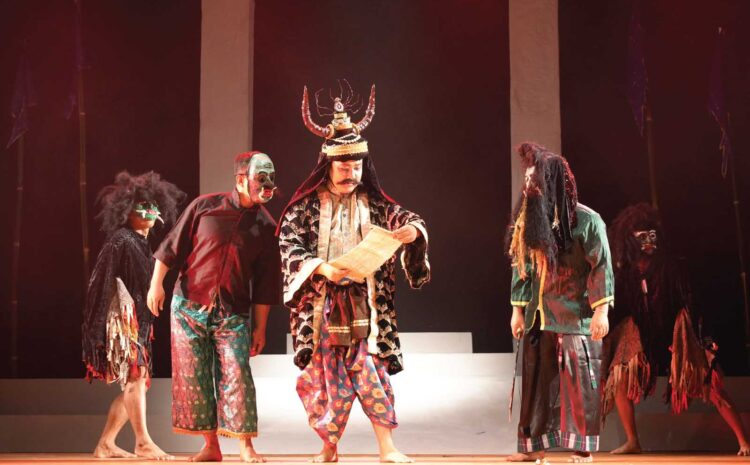
Nang Sipsong is a folk-theatre adaptation of the Tai Khamti legend of love, envy, and karmic justice surrounding the twelve queens of King Hokham Pala. The story begins in harmony, but the twelve queen’s harm to sacred river fishes disrupts the kingdom. Nang Ambala, an otherworldly maiden, becomes envious, poisons, and exiles the queens. Their son, Chow Dhukhapingya, grows up pure-hearted, guided by celestial beings and tested by demons. He ultimately uncovers his lineage, defeats Ambala by destroying her enchanted bow, and restores the twelve queens, bring- ing karmic balance and harmony back to the kingdom.
Director
Chow Pinthimang Namchoom, Namchoom, a dedicated member of the Tai Khamti Heritage and Literature Society for the past 15 years, has been an active contributor to numerous national and internation- all cultural exhibitions representing TKHLS. A versatile theatre artist, he has performed exten- sively in traditional folk theatre and is well known for his acclaimed lead roles in Chowpha Planglu and Soinam. His creative journey expanded further when he served as the Associate Director of last year’s production Ahimsaka, where his vision and sensitivity were widely appreciated. This year, he steps into a new milestone as the Director of Nang Sipsong, bringing his experience, cultural insight, and deep passion for Tai Khamti storytell- ing to guide the production with authenticity and artistic elegance.
Group
The Tai Khamti Heritage and Literature Society (TKHLS) is dedicated to preserving and promoting the cultural. legacy of the Tai Khamti community, including its arts, literature, language and indigenous performance tradi- tions. The Society first focused on documenting and supporting Pung theatre, the classical dramatic form rooted in ritual storytelling, dance and music. A key mile- stone was Chowpha Planglu.
In recent years, TKHLS has reimagined folklore for contemporary theatre, starting with Ahimsaka and continuing with Nang Sipsong, which combines classical movement, mythology and modern stagecraft. Through these productions, the Society keeps tradition alive while encouraging innovation for future generations.