
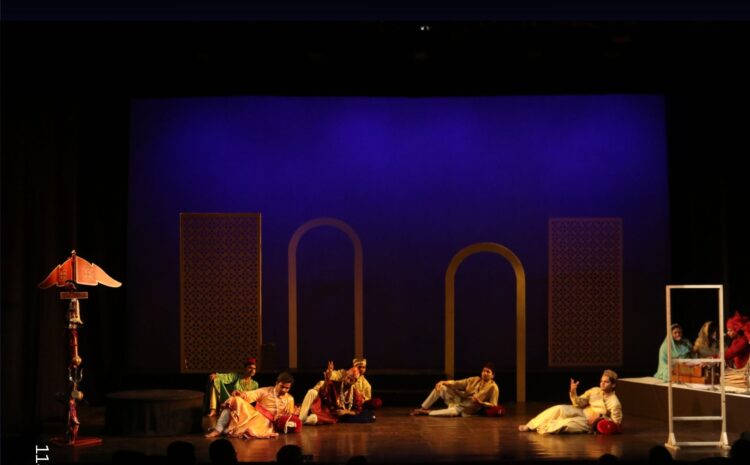
Biskohar Ki Vasantsena is a poetic performance text that reimagines the timeless figure of Vasantsena – the courtesan of classical Indian literature – as a symbol of feminine wisdom, creativity, and resistance. Set in the cultural landscape of Banaras and Awadh, the work unfolds through music, dance, and ritual. The poem begins with invocations and ritual sounds, presenting Kama – the energy of love – as the cosmic force of creation. Through it, the woman’s body becomes a site of divine expression rather than desire alone. As the story moves through the songs and rhythms of different faiths – Bhakti, Sufi, and folk – the work celebrates India’s spiritual and aesthetic unity. Gradually, modernity intrudes: colonialism, moral decline, and commodification displace the sacred world of art. Yet Vasantsena continues to dance, her masked face embodying the endurance of artistic spirit and womanhood itself.
Writer
Kumar Anupam’s poetry has appeared in leading journals like Tadbhav, Naya Gyanodaya, Hans, and Kathadesh. His collections include Barish Mera Ghar Hai and Kavita Samay-1. He has received the Sahitya Akademi Yuva Puraskar, Bharat Bhushan Agrawal Smriti Kavita Puraskar, and Kavita Samay Puraskar. He has been actively involved in editing the quarterly magazine Kalavasudha, co-edits the ideological magazine Shabd Satta, and assisting in the editorial work of a volume of the Awadhi anthology.
Director
Pratibha Singh is a distinguished Kathak dancer, choreographer, and theatre artist known for her innovative interpretations of classical themes through contemporary expression. Beyond performance, she works as a cultural educator, engaging with young artists and communities to preserve India’s intangible heritage. With numerous national and regional presentations to her credit, she continues to shape the dialogue between classical dance and contemporary thought.
Director’s Note
Biskohar Ki Vasantsena is a journey into the soul of the feminine creative force. I visualized Vasantsena not as a courtesan, but as the eternal woman – bearer of Kama as sacred creation. The dance drama begins with ritual music – Shankh, Shahnai, and Sarangi – invoking Banaras and Awadh’s cultural essence. Each sequence blends Kathak, folk, and abstract movement to trace the evolution of art from devotion to displacement. The Dance of Kama symbolizes creation through separation, while the Yogini Dance celebrates liberation of body and spirit. As the sound of army boots enters, modernity intrudes, silencing beauty and faith. The masked face at the end reflects both concealment and endurance – the woman’s unbroken rhythm through time. Directing this work was an act of remembrance for all forgotten women artists whose art was worship and wisdom. Vasantsena’s final Aalap dissolves into eternity, reclaiming dignity for art, womanhood, and desire itself.
Group
Kala Mandali is a collective or ensemble of artists dedicated to preserving and promoting India’s diverse performing arts traditions. It often functions as a cultural nucleus – training young artists, staging performances, and reviving folk and classical forms that risk disappearance in modern times. Whether performing street theatre, classical dance, or musical renditions, a Kala Mandali represents the living continuity of India’s intangible heritage.