
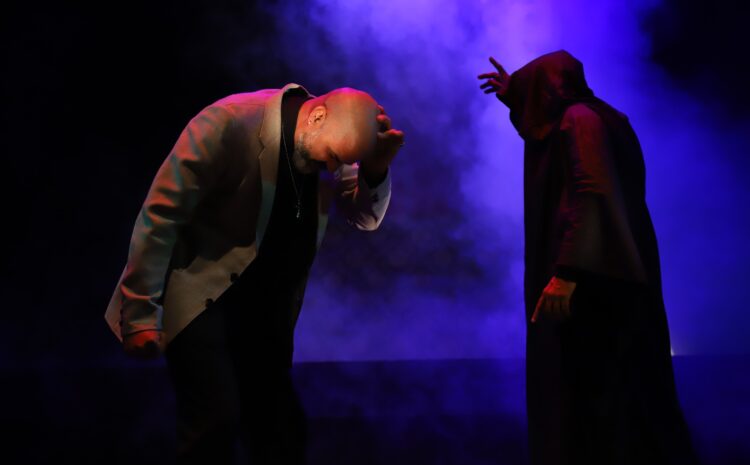
Set in the mist-laden hills of Darjeeling during the monsoon of the early 1980s, Darjeeling Venom is a sweeping crime tragedy that re-imagines Shakespeare’s Hamlet in an Indian context. Behind the manicured tea gardens lies an underworld of greed, ambition and smuggling, where snake venom has become the new currency of power.
Hector Wilson, the patriarch of the wealthy Wilson family and owner of vast tea estates, is found dead from an apparent snakebite. Officially it is an accident, but whispers of the deadly cobra-venom trade – and Hector’s attempts to expose it – spread through the town. Into this storm returns his son Hayden, a law student educated in London and a national polo player, now grieving and disoriented. Haunted by visions of his father’s ghost, Hayden hears a chilling accusation: his uncle Karson, outwardly the family’s protector, has murdered Hector to seize his business and political clout.
Carson presents himself as a savior – comforting Hector’s widow, Gloria, and promising to protect Hayden. He controls a vast smuggling network. His daughter, Oshma, defies her father’s warnings and clings to Hayden.
Into this morally poisoned landscape steps Harshad Sharma, a driven NCB officer from Delhi. Sent to dismantle the snake-venom racket, Harshad discovers he is surrounded by enemies and informers, his every move watched. As his investigation closes in, two of his allies are killed and he himself is wounded, but he wins the loyalty of Basu, a young constable whose sister died from a cobra-venom overdose. Together they try to gather evidence before Harshad’s forced transfer back to Delhi.
The play follows Hayden’s descent from grief into obsession. Torn between love for Oshma and the ghost’s demand for revenge, he prowls graveyards and haunted tea gardens, searching for the hidden file his father left behind – evidence that could expose Karson and clear Hector’s name. Each scene tightens the net of lies: Gloria’s hasty engagement to Karson, Father John’s whispered confessions, Porush’s double game, Jagdeesh’s corruption and remorse.
As the monsoon peaks, all threads converge at the graveyard where the story began. Prabhu, the gravedigger and chorus-figure, prepares another grave as thunder rolls. The ghost of Hector rises once more. Hayden confronts Karson; truth and vengeance collide. In this final reckoning, the circle of power, poison and retribution closes, leaving no one untouched.
With its misty atmospherics, morally ambiguous characters and supernatural undertones, Darjeeling Venom transforms Hamlet’s timeless questions – “who killed the king?” “what does revenge cost?” – into an Indian crime saga about the venomous mix of family, politics and greed.
Writer and Director
Divyanshu is an accomplished Indian film and theatre director, writer, and actor. His film Mortuus was officially selected for the prestigious Dadasaheb Phalke Award. He has written and directed several feature films, short films, and plays, including Darjeeling Venom. As an actor, he has performed in renowned plays such as Andha Yug, Tughlaq, Peele Scooter Waala Aadmi, Main Hoon Na, and many others. Trained under the eminent Bharti Sharma, Divyanshu also serves as a mentor at Kshitij Theatre Group. His play was honored as the Best Play of the Year by the Delhi Government in 2024. His feature film Udayan is currently being showcased at multiple film festivals. Additionally, he is one of the leading heads of Kshitij Theatre Group, one of Delhi’s most prominent theatre repertories. Over the years, he has also coached and guided numerous aspiring actors.
Director’s Note
Shakespeare’s Hamlet has always fascinated me because it isn’t just about revenge; it’s about the cost of knowing the truth. What happens when your duty to family collides with your duty to justice? What poisons a community more deeply – venom in the veins, or corruption in the soul? In this production I wanted to explore those questions in an Indian setting where tradition, power and secrecy intertwine.
We have kept the familiar ghost, graveyard and soliloquy-like moments, but transplanted them into a world of tea-estate dynasties, snake-venom smuggling and political ambition. The play’s blue-grey palette, the use of thunder, rain and fog on stage, and the chorus-like figure of Prabhu are all designed to echo the natural environment of Darjeeling and the inner weather of our characters.
At its heart, Darjeeling Venom is not just a thriller or an adaptation. It is a story about a young man’s struggle to keep his father’s name clean while deciding whether vengeance can ever bring peace. I hope you experience not only the suspense but also the moral and emotional currents beneath it, and that it lingers with you after the curtain falls.
Group
Kshitij Theatre Group, founded in 1987 by the celebrated NSD alumna Bharti Sharma, has played a pivotal role in promoting the rich tapestry of Indian art and culture through the transformative medium of theatre. The group was established with a vision to produce thought-provoking and impactful performances that explore social issues, human relationships, and the complexities of cultural identity. Through a dynamic blend of modern and classical Indian plays, as well as Western works, Kshitij has garnered a reputation for its exceptional storytelling and powerful performances. With a vast repertoire of plays, including renowned productions like Karmabhumi, Abhigyan Shakuntalam, and Yayati, the group has earned widespread recognition from both audiences and critics. Many of these plays have been lauded for their depth and relevance, addressing topics that resonate on a universal scale. The group’s commitment to fostering creativity extends beyond the stage, with regular theatre workshops in remote areas of India in collaboration with the Department of Culture, Government of India. These workshops aim to nurture talent and make theatre accessible to underserved communities, spreading the magic of performing arts to areas where such opportunities are limited. Furthermore, Kshitij Theatre Group has been invited to perform at some of the world’s most prestigious international theatre festivals, including the Theatre Olympics, Bharat Rang Mahotsava, and the Kathmandu International Theatre Festival. Their extensive body of work has earned them numerous accolades, including multiple Best Play of the Year awards by Sahitya Kala Parishad, underscoring the group’s continued excellence in the world of theatre.