
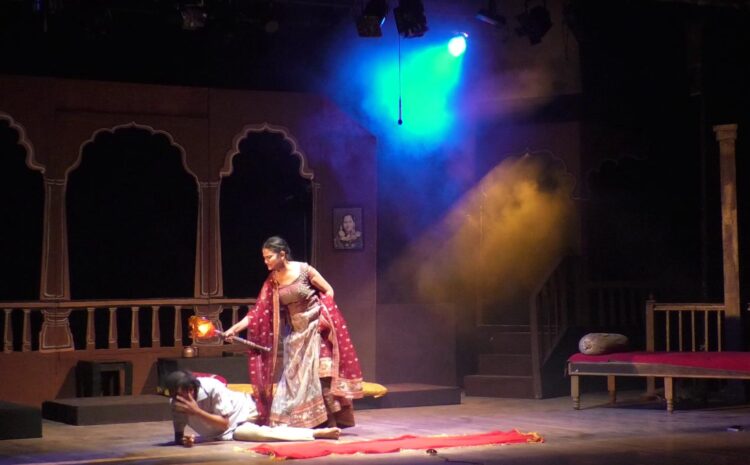
Hamidabai Ki Kothi is a poignant and powerful play that delves into the decline of traditional courtesan (Tawaif) culture in India. Set in a time when the refined art of classical music and dance was fading from the royal courts and cultural spaces, the play centres around Hamidabai, an aging courtesan who runs a once-prestigious “Kothi” (salon) known for its classical performances and artistic excellence. Hamidabai views her art not as entertainment, but as a sacred tradition passed down through generations. However, times are changing. With the rise of cinema, recording technology, and the shift in public taste, the courtesan’s role in society is diminishing. Respect for the classical arts is being replaced by demand for quick, vulgar entertainment, and courtesans are being pushed into the shadows, often into prostitution. Amidst this cultural shift, Hamidabai struggles to preserve the dignity of her art and protect her young daughter Shabbo from being drawn into a world she no longer respects. She dreams of giving Shabbo a better life through education, but poverty, exploitation, and societal hypocrisy make this almost impossible. As patrons dwindle and debts rise, Hamidabai is forced to confront a harsh reality. The play ends on a deeply emotional note, as the once-vibrant Kothi becomes a symbol of forgotten culture, crushed dreams, and a mother’s silent resistance.
Writer
Anil Sadashiv Barve is a Writer, Journalist, Editor, Playwright, and a Novelist known for literary works like Me Swami Dehacha, Dongar Mhatara Zhala, Akara Koti Gallan Pani, Columbus Vaat Chukla and many others.
Translator
Dhanashree Heblikar is an integral member of Swatantra Theatre group. She has adapted and translated many plays, and films from Telegu to Hindi, and in Marathi as well. She has been featured by India Today magazine as a youth changemaker and an under 30 years of age influential youth of India published by Hindustan Times.
Director
Abhijeet Choudhary is a versatile artiste who has studied both theatre and film making. He has directed several full-length Hindi and English Plays, one-act plays, and street plays. He conducts classes and theatre workshops for aspiring students as well as for persons with disability.
Director’s Note
While doing the play I found the play is right blend of our culture and contemporary times. Some pointers that I found interesting are the structure captures the emotional arc of the play from pride and tradition to pressure and eventual loss while spotlighting the social commentary at its heart; Decline of Courtesan Culture; Changing Moral Standards; Gender and Patriarchy; and Economic Marginalization. In essence Hamidabai Ki Kothi is a social critique mourning the death of cultural refinement and exposing society’s hypocrisy in abandoning the very women who once defined its artistic legacy.
Group
Swatantra Theatre was established in Pune in 2006. The group’s plays have been staged in many national level festivals and Institutions like the BRM 2019-2020, Armed Forces Medical College’s Silhouettes, Deccan Literature Fest, FTII, National Defence Academy, IIT Festivals in Guwahati, Mumbai and Roorkee, Symbiosis Colleges of Media and Communication, etc.