
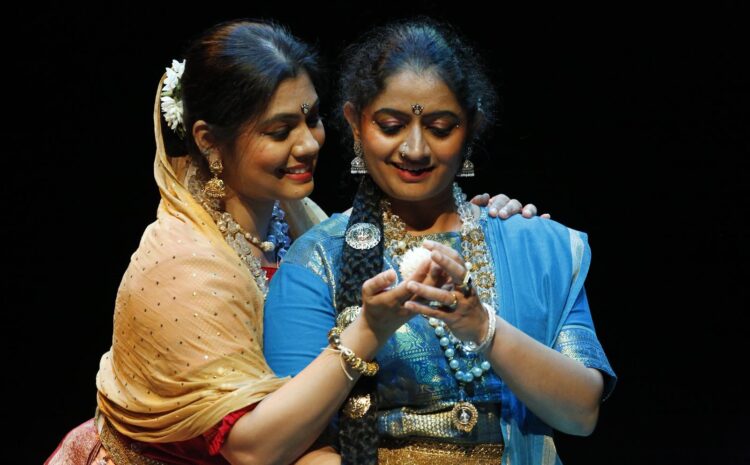
The play ‘Parijata’ is based on an incident from Mahabharata. The story of Parijata is quite popular. In Karnataka, it is performed as Sri Krishna Parijata across generations of actors and theatre troupes in Sannata form, which is a folk theater form. In Assam, it is performed as Parijat Haran in the Sattriya form, which is a classical dance. With our production Parijata, we propose to take selected elements from both these versions and create a completely new version, where we attempt to reinterpret Krishna Parijata in the light of contemporary times without losing the essence of the folk performance. This version questions why Krishna, who gave Amruta to Gods and made them immortal, had to wage war with Indra, the King of Gods for the sake of Parijata. While retelling the story of Parijata through a musical dance drama, we have tried to present it with a strong message towards women’s empowerment.
Writer :
Shri. K. Y. Narayanaswamy popularly known as KYN, is a popular Kannada poet, scholar, critic, and playwright. He is currently a Kannada Professor at the Maharani Cluster University, Bangalore. He is the author of many popular Kannada plays including Kalavu, Anabhigna Shakuntala, Chakraratna, Huliseere, and Vinura Vema. He is credited with adapting Kuvempu’s magnum opus Malegalalli Madumagalu into a 9-hour play. He won the Karnataka Sahitya Akademi Award for his play ‘Pampa Bharatha’, which is considered as a milestone in modern Kannada theatre.
Director :
B Jayashree (b.1950) is a leading actor and director in the Indian Theatre. She is a graduate of the National School of Drama, New Delhi, (1973). In her 68 years of theatre journey, B Jayashree built a versatile and prolific portfolio working with directors like Ebrahim Alkazi, B.V. Karanth, N. S. Venkataram, and Prasanna among others. She has acted and directed close to 100 plays in Kannada, Hindi, English, and Konkani language.
B Jayashree is the creative director of Spandana – a leading Kannada theatre troupe in Bengaluru. With Spandana, she has directed and acted in more than 50 plays including Karimayi, Agnipatha, Girija Kalyana, Chitrapata Ramayana, Neevu Kaanire, Parijata. The play Lakshapathi Rajana Kathe, directed by her, participated in the International Experimental Theatre Festival in Cairo and Tashkent in the year 1989. Over the years B. Jayashree has received various coveted awards. In 1996, she was honored with the Uttar Pradesh Sangeet Natak Akademi’s Safdar Hashmi Award. In 2013, She received the fourth-highest civilian honor of India, the Padma Shri Award from the Government of India for her immense contribution to the field of theatre. She has also received Karnataka Nataka Academy Award, Central Sangeet Nataka Academy, Rajyotsava Award, B. V. Karanth Smrith Puraskar, and many more.
Director’s Note
For several years I wished to direct Parijata and now the time was right. So, I got in touch with K.Y. Naryanaswamy who has written plays for us earlier. However, KYN was intimidated and said this is not something I can write. But I managed to convince him to write. What kept haunting me was why Indra waged war with Krishna for the sake of Parijata, when Krishna himself gave life to Indra. I did not want the play to just focus on Krishna and Indra but also put light on the story of Parijata. The major form used in the play is Sannata, as every play I make will have some folk element to it. Usually, Sannata is performed within 12 feet-long and wide area, there is not much movement in this form, but keeping in mind proscenium and open-air theatres, we are performing the play within 14 feet-long and wide area. In Sannata not more than two artists and a musician perform, keeping that in mind though the production has close to 15 artists, we have restricted each scene to not more than three artists at once. Despite having elements of a folk-art form and elements of a company theatre in the play, we have made sure not to stereotype the characters. For instance, the character of Krishna is played by a female actor, there are many characters and instances like these in the play that break stereotypes.
Group :
‘Spandana’ was established in the year 1975. One of the striking features of the group is its successful efforts in adapting modern techniques to present Karnataka’s folk tradition in an aesthetic style. Spandana has carved a niche in the field of Kannada theatre through breathtaking performances, stark experimental works, and captivating theatre design. It continues to enthrall the audience in entire India and abroad. Lakshapathi Rajana Kathe produced, courtesy of Central Sangeet Natak Akademy, New Delhi, an experimental folk play adjudged as the best play at the National level. It was later selected to participate in the International Theatre Festival at Cairo and the Youth Experimental Theatre Festival at Tashkent in September 1989.
Another significant contribution of ‘Spandana’ to Kannada theatre is the adaptation of various novels, short stories, and poems into forms of drama. The shining example is Dr. Chandrashekhara Kambara’s Karimayi which was adapted into a very successful theatre presentation. Under the Ford Foundation Theatre lab grant, a lot of time was devoted for fieldwork to study the rare folk art forms in depth. Plays ‘Agnipatha’, ‘Siri Sampige’, and ‘Chitrapata’ are the outcome of this research work using Gondaligara Mela, Martial art forms of India, and Bhootheya Aata respectively. In these Fifty-One years ‘Spandana’ has gone on expanding its creative activity and is one of the torchbearers of Kannada theatre.