
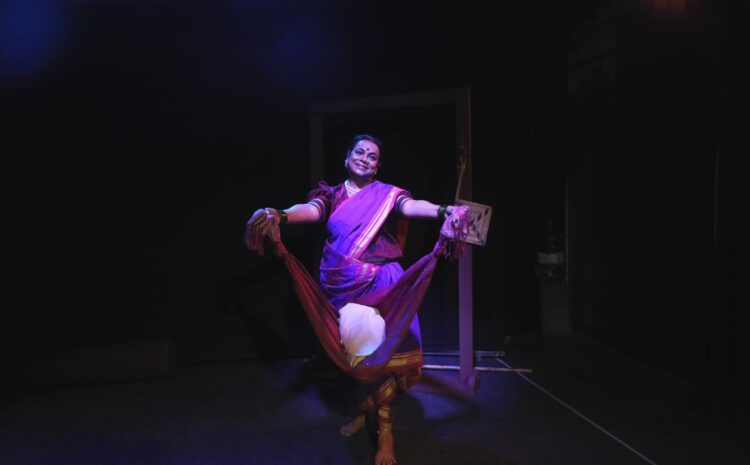
A Voice of Resistance. A Mirror to Power. A Question to the Present. Sharmishthe is not just a character from mythology – she is a woman who refuses to be silenced, even centuries later. Strong-willed, deeply aware, and rooted in the present, Sharmishthe questions the desires, delusions, and decisions of the men around her – Yayati and Puru – in a world shaped by power, patriarchy, and the obsession with eternal youth.
At the heart of the play is a timeless conflict: the hunger for immortality, the politics of possession, and the cost of unchecked ambition. Long before such ideas made global headlines, Sharmishthe lived them. A princess turned servant, a mother, a silent witness, and a fierce challenger – her journey is one of inner strength and relentless truth.
As the myth unfolds, we see Yayati, cursed with old age, bargain with his son Puru to trade his years for youth. What seems like myth slowly reveals itself as a painful metaphor – of privilege handed down, of generations burdened by the unhealed desires of their elders. And standing at the centre is Sharmishthe, who sees through it all.
This play reimagines ancient events through Sharmishthe’s eyes. Through her voice, the past meets the present. She doesn’t merely retell the story – she interrogates it. She confronts Yayati’s delusion, questions Puru’s burden, and holds a mirror up to a world that still believes nature is something to be consumed, controlled, and inherited. Sharmishthe time and again reminds both Yayati and Puru, that the transition they experience is only a dilution and they remain in multi verse, a higher dimension of time and space. Sharmishthe living in present, convincingly brings back Yayati and Puru from dilution to their senses – i.e. presence.
With myth as metaphor and poetry as protest, Sharmishthe is a call to pause, reflect, and reimagine – not just the stories we tell, but the way we live.
Writer
Dr. Beluru Raghunandan is a prominent name among the young poets of Kannada Literature. His famous works have been published in genres like poetry, children’s literature, drama, stories, column writing, travel literature and research writing. He is a widely acclaimed poet, critic and dramatist in Kannada Theatre.
He has been awarded the Kendra Sangeet Natak Academy’s Bismilla Khan Award and the Karnataka State Naataka Academy Award.
Director
Born on 3rd January 1949 in Adderi, Karnataka, Shri Chidambara Rao Jambe is a well-known Kannada theatre director and cultural administrator. He is an alumnus of the National School of Drama. Karnataka Nataka Academy awarded him for his theatre work in 1994, Kerala Sangeetha Nataka Akademi honoured him as the Director of the National Theatre Festival 2003, and he received the Sangeet Natak Akademi Award for 2014 for his contribution to Indian theatre as a director. Chidambara Rao Jambe is a well-known teacher of drama and was the Principal of Ninasam Theatre Institute, Heggodu for 22 years, and the Director of Mysuru Rangayana. He was trained in Yakshagana folk art of Dakshina Kannada.
Group
The Ranga Sampada troupe, which has crossed fifty years, holds a special place in theatre history. While many contemporary troupes have faded away, Ranga Sampada continues to remain active and relevant through its consistent efforts and artistic discipline.
Its survival is a result of clear principles – it has never relied on popularity, glamour, cinema influence, actors’ egos, or sponsorship politics. Instead, it has embraced diversity and sincerity, staying rooted in the soil and the sweat of true theatre work.
Ranga Sampada’s social commitment, people-oriented outlook, and engagement with contemporary issues have ensured its continued significance. Theatre troupes that fail to connect with people eventually disappear, but Ranga Sampada stands strong with a record of fifty plays over fifty years, each created by dedicated playwrights and directors.
This troupe’s balanced approach to success and struggle has made its journey a vital part of Bengaluru’s theatre history. Over the decades, Ranga Sampada has nurtured numerous directors, playwrights, and audiences, contributing immensely to Kannada theatre.
Its fifty years of work reflect the spirit and legacy of the early days of Karnataka’s theatre movement – a symbol of endurance, creativity, and social connection.