
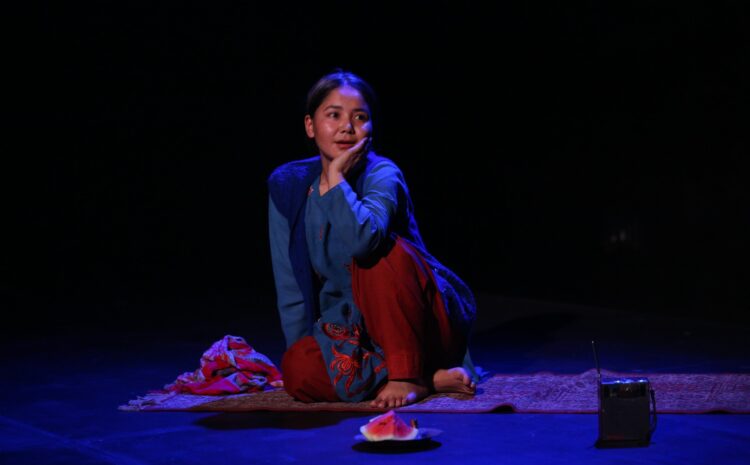
“Shyok – A Tale of Love and Longing” is a poignant story set in the aftermath of the 1971 Indo-Pakistan war, when newly drawn borders divided villages, families, and hearts overnight. In the village of Turtuk, Ladakh, lived Haseena, a simple girl whose world revolved around her family and home. After marrying a charming radio jockey from her village, her life blossomed like a radio finding its frequency. Through his program “Hello Farmaish,” he dedicated songs from films like Kati Patang and Aradhna, filling her days with music and love. But political borders cruelly separated them—Haseena on the Indian side of the Shyok river and her husband on the Pakistani side. Years passed in longing until one day she heard his voice again on a Pakistani radio frequency. Clinging to hope, she waited endlessly by the river, defying social norms and questioning authorities, yet receiving no help. While the village moved on, Haseena remained bound to her love. Legends say that on a full-moon night she drifted into the river, symbolizing love’s tragic surrender to war and division. The story reflects on humanity, longing, and the devastating cost of conflict.
Writer
Bhushan Patil is a distinguished theatre and film director from Dhule, trained in Direction and Writing at Dr. Babasaheb Ambedkar Marathwada University and later specialized in direction at the National School of Drama. Internationally recognized, his short film MaleFemale won 15 awards, including the 11th Dadasaheb Phalke Award (Best Director Jury Award). In theatre, he has directed notable productions like Trance and Blindness and performed impactful roles such as Aurangzeb in Ithe Oshalala Mrutyu and Ranjha in Heer-Ranjha. His artistic vision blends memory, spirituality, dreams, and new media to create immersive, introspective narratives.
Tsering Lhamo, from Sumoor, Nubra (Ladakh), is the first female theatre artist from Leh to graduate from NSD with a postgraduate diploma in acting. Active since 2016, she has performed in over 20 plays, portraying roles like Nora in A Doll’s House, Katrin in Mother Courage, and Grusha in The Caucasian Chalk Circle. She has collaborated with eminent directors and created her solo work Daman, exploring gender politics, while focusing on identity, culture, and performance.
Director :
Bhushan Sanjay Patil, a distinguished director & Actor from Dhule, Maharastra is a versatile professional in theatre and film. his expertise with a post-graduation in direction at the National School of Drama, New Delhi.
Patil’s work is marked by creativity and success. Awarded internationally, his acclaimed short film “MaleFemale” received 15 awards including the 11th Dadasaheb Phalke Award- Jury Award.In theatre, bhushan patil has directed notable productions such as “Trance” and “Blindness,” showcasing his diverse skills.
Bhushan, merges memories, dreams, spirituality, and new media to craft captivating narratives that transcend conventional boundaries. With a palette of colors drawn from childhood recollections and a deep exploration of the subconscious realms.
Director’s Note
This story is a poignant exploration of love, loss, and the silent tragedies of war. Haseena’s life, once filled with the warmth of her husband’s radio dedications, is torn apart by borders that governments impose but hearts refuse to accept. As she clings to fading radio frequencies and memories, the Shyok River becomes both a witness and a barrier—symbolizing the cruel separation of lovers caught in political conflict. Through sound, nostalgia, and an ever-present sense of longing, the story highlights the resilience of love against the indifference of history. From a director’s perspective, the river must feel ever-present—sometimes real, sometimes symbolic, mirroring Haseena’s internal world. The sound design will play a crucial role, weaving in the static of lost radio frequencies, echoes of old Bollywood songs, and the silence that speaks louder than words. Visually, the play will rely on minimal yet evocative staging—moonlight on water, shifting shadows, and the contrast between stillness and movement. Haseena’s journey is not just personal but universal, a reflection of countless unheard voices across history. In the end, her love story does not fade; it becomes legend, carried by the river, remembered in the static of lost frequencies.